


Por Katie Auman
Esto forma parte de nuestro repaso anual a la historia, el impacto y el futuro de Old Town Library, mientras nos preparamos para celebrar su 50.º aniversario en octubre.
After 70 years of public library services at the Carnegie building on Mathews St., the demand on the building’s space and the library’s collection was reaching its limits. In 1974, the Carnegie building and the library staff were serving 65,000 people in a space designed for a city population of only 12,000 – and this was even after a 1937 addition was built.
Designing Tomorrow Today
Between 1950 and 1970, the population of Fort Collins more than doubled. As a response to rapid growth and armed with a future-forward mindset, a citizen advocacy group, Designing Tomorrow Today, along with the Fort Collins City Council, and voters worked to create a capital improvement project to fund the construction of a larger and more modern library building and other community institutions like the Lincoln Center, Mulberry Pool, and transportation infrastructure.
Initially, the City Council chose to locate the new library building at Washington Park on the City Hall block (within the boundaries of Maple, Laporte, Howes, and Meldrum Streets). However, the public strongly opposed this decision, and after weeks of public discourse, the library’s location was chosen by a public ballot vote in 1975. The voters selected Lincoln Park (later renamed Library Park to avoid confusion with the new Lincoln Center) to be the site of the new library.
The Building & It’s Books
In anticipation of the move to a larger library space, the Fort Collins Public Library began a book acquisition program. From 1974 to 1976, the library combined $360,000 of federal and local funds to acquire about 30,000 new volumes to fill the new library space. The project, which at one point involved library staff processing over 1,000 books per month, represented a 30% growth in the library’s collection.
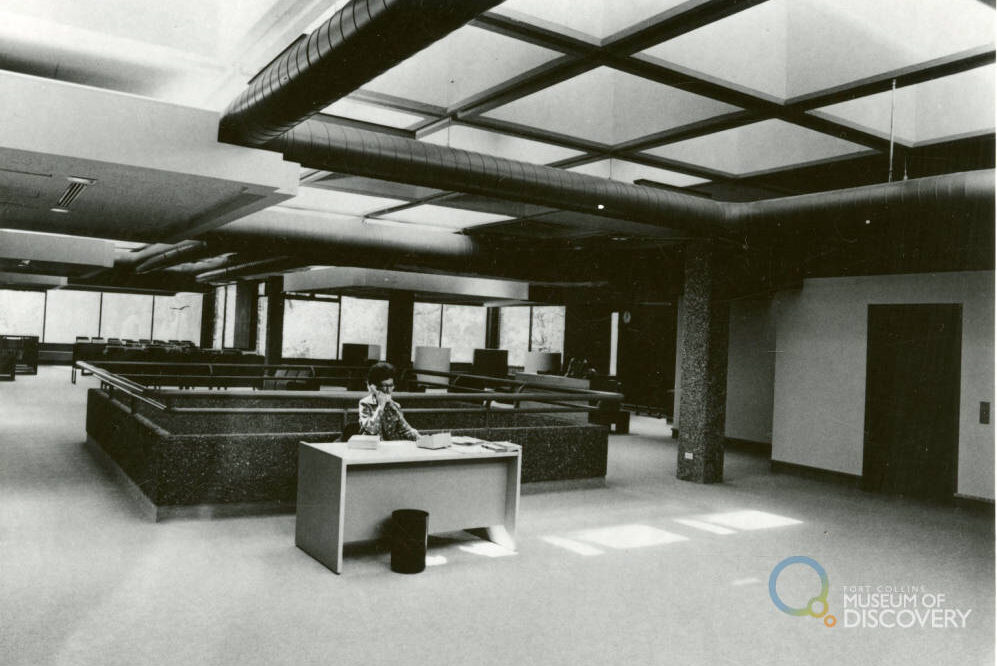
On October 18, 1976, the nearly 34,000-square-foot Main Library opened at 201 Peterson St. to an enthusiastic crowd who enjoyed a Grand Opening celebration on Oct. 31. The building, designed by architect Al Ziegel, became the centerpiece of Lincoln Park. The total cost of the project was ~$ 1.75 million.
A Rocky Mountain Collegian article, published the day after the Main Library opened, touted the building’s desks for readers, its floor for children’s books, and a “centennial room” on the upper level dedicated to history.
Impact of the New Space
In a 2019 interview, Larry Webber, director of the Fort Collins Public Library from 1966-1982, pointed out that Main Library’s initial opening wouldn’t have happened without the hard work of community volunteers who spent an entire day transferring books from the Carnegie building, through the second story windows, onto a forklift, into CSU’s book trucks, and then across the park to the new location.
This much larger building easily accommodated more than 107,000 volumes, sat 124 patrons, and included multi-media capabilities, public meeting rooms, photocopying, and more. It was a modern building that could truly serve the city’s needs.
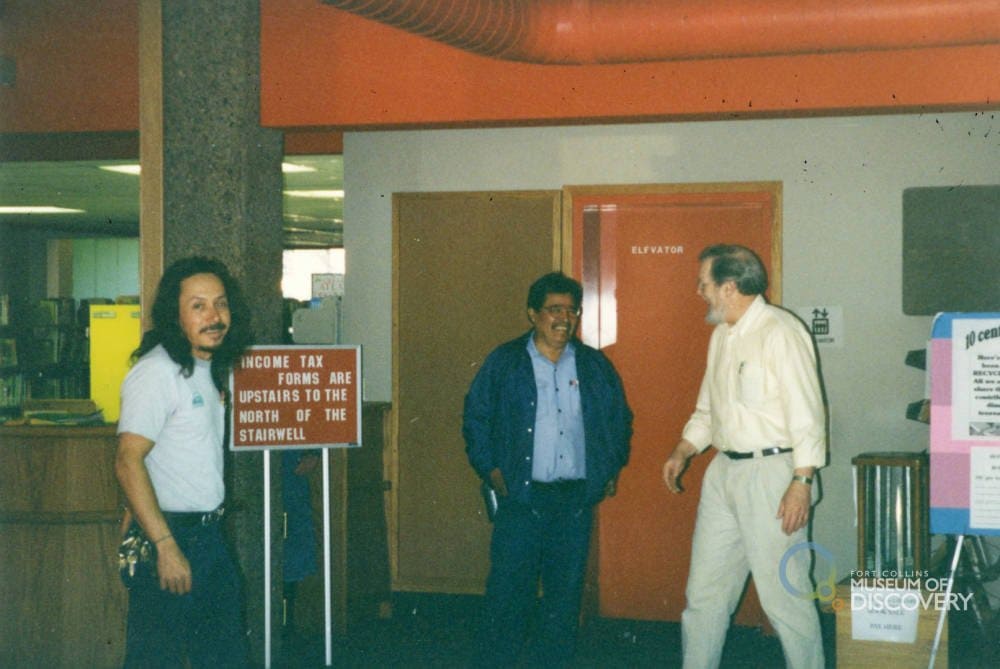
“Our new space was beautiful, but also a bit overwhelming for the staff,” recalled Webber. “We’d never had so much room to work with: meeting rooms, study areas, a dedicated children’s area, more shelving.”
One customer, Michael Schmidt, who was a child in the 1970s, remembers the innovative and exciting new library additions, stating, “The Fort Collins library was the first time I ever saw a ‘photocopy’ being made. I think it cost 25 cents.”
With the expanded space available, the library was able to partner with other organizations and agencies to develop and produce innovative programs and cultural experiences like film series and international education (the very start of the still-popular monthly International Night series).
The Fort Collins Public Library’s Main Library, now known as Old Town Library, continues to serve as a popular hub for reading, information, and community outreach.
Descubra más historias de bibliotecas