


Highlights from the TED Democracy Philadelphia Founding Futures Symposium
By Ganah Elhemri
250 years ago, a large-scale social experiment informed by the guardrails of self-governance was established. Authority, derived from the will of the people, became the standard for modern democracy, and an enduring legacy of independence arose from a congregation of thinkers based in Philadelphia, Pennsylvania.
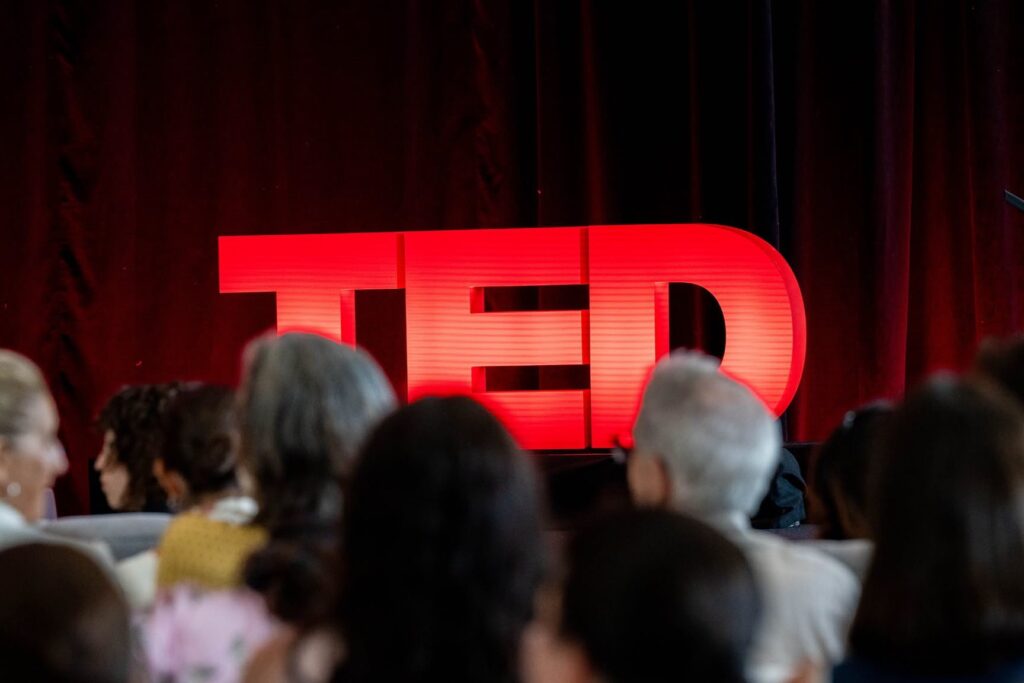
As the United States approaches its 250th anniversary, Philadelphia remains a hub for autonomous thought and creativity. TED Democracy Philadelphia: Founding Futures, a recent day-long symposium in America’s birthplace, reflected the city’s history and ongoing exploration of modern democracy.
Poudre Libraries, in partnership with the Fort Collins Museum of Discovery, was one of only 65 libraries across the United States and its territories to host the TED Democracy livestream event, bringing innovative concepts to the Fort Collins community.
250 years ago, a large-scale social experiment informed by the guardrails of self-governance was established. Authority, derived from the will of the people, became the standard for modern democracy, and an enduring legacy of independence arose from a congregation of thinkers based in Philadelphia, Pennsylvania.
As the United States approaches its 250th anniversary, Philadelphia remains a hub for autonomous thought and creativity. TED Democracy Philadelphia: Founding Futures, a recent day-long symposium in America’s birthplace, reflected the city’s history and ongoing exploration of modern democracy.
Poudre Libraries, in partnership with the Fort Collins Museum of Discovery, was one of only 65 libraries across the United States and its territories to host the TED Democracy livestream event, bringing innovative concepts to the Fort Collins community.
The event convened civic organizers and global thought leaders who probed democracy’s past to look towards the future. Speakers at the event asked questions and led discussions surrounding the gap between democracy’s promise and its reality, using the aspirational Declaration of Independence as a launchpad for new thoughts and ideas.
While the event hosted over 15 thought-provoking speakers focused on the future of democracy, below are a few who stood out to me as an attendee.
If you missed out on the livestream event, you can view recordings of the sessions online beginning July 4. Be sure to also check out the Library’s events calendar for upcoming civic engagement programs and discussions.
Political Polarization and the Evolution of Democracy
As President of the Pew Research Center, Michael Dimock spoke about the United States’ widely-recognized political polarization from a statistical lens:
- 81% of Americans believe that the shared experience of the global COVID-19 pandemic deepened national polarization, a higher percentage than in any other country surveyed.
- 59% of Americans feel that the United States’ “best days are behind us.”
Despite these bleak statistics, Dimock offers us a hopeful view of the future. He emphasized “democratic imagination” among Americans, a concept rooted in the idea that democracy is not a fixed system, but an adaptive one that transforms to meet changing needs and challenges. He argued that, because democracy must be dynamic, arising problems are not signs of flaws in the system, but are the nature of a democratic republic.
Civic Service as a Foundation for Democracy
Scott Reich took the approach that the future of democracy lies not in what it offers us, but in what it requires from us. Using his background as a historian and legal scholar, Reich looked to ancient Athens, considered to be the world’s first democracy.
According to Reich, Athenians did not assume that citizens were naturally prepared for self-government. Instead, they believed democratic participation required training and civic education before citizens could fully exercise their political rights.
Using this example, Scott Reich made the case for civic service as a pathway to citizenship and belonging, urging young Americans to develop the habits and responsibilities of citizenship through practice rather than simply claiming them.
Rethinking Democratic Representation with Citizen Assemblies
While presented in different ways, both Terry Bouricius and Jon Alexander shared similar views on the development of democracy. As a former politician, Bouricius brought first-hand experience with the divide between state demographics and the people representing them.
He argued that representatives should be a miniature portrait of an area. This is not a reality given that less than one percent of Americans ever serve in any elected or appointed part of government. To tackle this problem, Bouricius suggested sortition, a system that uses randomly selected citizens’ assemblies.
He pointed to juries as a common example of a randomly selected governing body that is both representative of the community and resistant to corruption. Likewise, Jon Alexander supported incorporating citizens’ councils into existing democratic structures. He highlighted existing examples where sortition has already been successful, including a mention about the civic assembly process for the former Hughes Stadium land right here in Fort Collins.
The Role of Libraries in Strengthening Community Life
Shamichael Hallman, an author and national leader of the Urban Libraries Council, focused on the role of public spaces, especially libraries, as places that support and strengthen communities. Hallman emphasized that books and libraries are the foundation of public life. He discussed the importance of promoting libraries as safe spaces for curiosity and empathy so that communities become ready to spark change together.
Here in Fort Collins, Poudre Libraries serve as vital community hubs, offering public access to resources, regular community events that foster social connection, and spaces dedicated to education. From events specifically focused on civic engagement, such as the “What’s Your Vote” mock election, to a “Bring Your Own” book club intended to cultivate community bonds, the libraries provide a space to be civically involved.
By promoting active participation, our libraries help create a stronger, more connected community, where people are empowered to stay engaged and make a positive difference.
The 250th anniversary of the United States is a monumental milestone; it marks the endurance of democracy’s promise and celebrates America’s growth across history. However, the TED Democracy symposium served to bridge past and present, making the anniversary not simply a commemoration of where self-governance began, but an opportunity to recognize our ability to impact where it goes from here. The conversations sparked by each speaker reminded us that a government “of the people, by the people, and for the people” counts on our commitment to building a better tomorrow.
Discover More Library Stories